
The Problem
The existing KPI dashboard CodeBanana suffered from poor information hierarchy, inconsistent visual patterns, and inefficient layouts, making key metrics difficult to identify. Cluttered filters and inconsistent components further reduced usability.
The challenge was to redesign the dashboard into a clear, intuitive, and scalable dashboard that improves clarity, accessibility, and decision-making.

What I Did
I led the UX audit, user experience redesign, and design QA, improving the dashboard's information architecture, visual hierarchy, and design consistency from research through implementation.
UX Audits
The redesign began with a UX audit to evaluate user workflows and uncover usability issues. I identified key friction points, including cluttered layouts, unclear navigation, inconsistent visual patterns, and inefficient data presentation. These insights shaped a new information hierarchy that prioritized high-value metrics, reduced scrolling, and made critical business insights easier to access at a glance.

Design Improvements
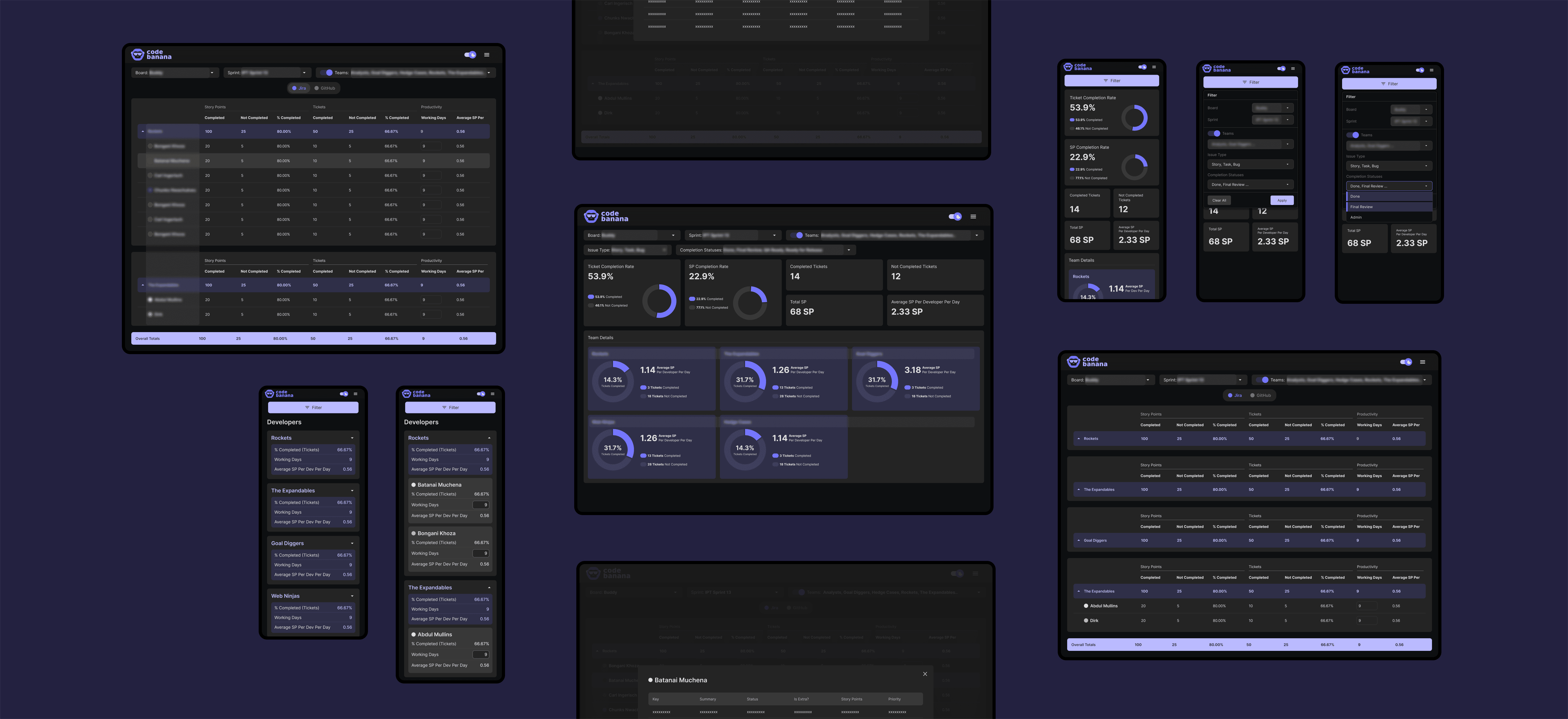
With the key usability issues identified, I redesigned the dashboard to improve usability and scalability. I refined layouts, optimized data visualizations, and introduced consistent interaction patterns to reduce cognitive load. I also designed responsive layouts, supported light and dark modes, and established reusable design patterns to ensure a consistent, accessible experience across screen sizes while enabling future scalability.

The Solution
The redesigned CodeBanana delivers a cleaner, more intuitive experience that highlights key metrics and supports faster decision-making. Improved information hierarchy, streamlined layouts, and consistent visual patterns make data easier to interpret, while a scalable, accessible design foundation ensures the dashboard can grow with evolving business needs.

Outcome
Based on internal user testing, stakeholder feedback, and product evaluations, the redesigned CodeBanana demonstrated measurable improvements in information discovery, task efficiency, user satisfaction, and design scalability.

