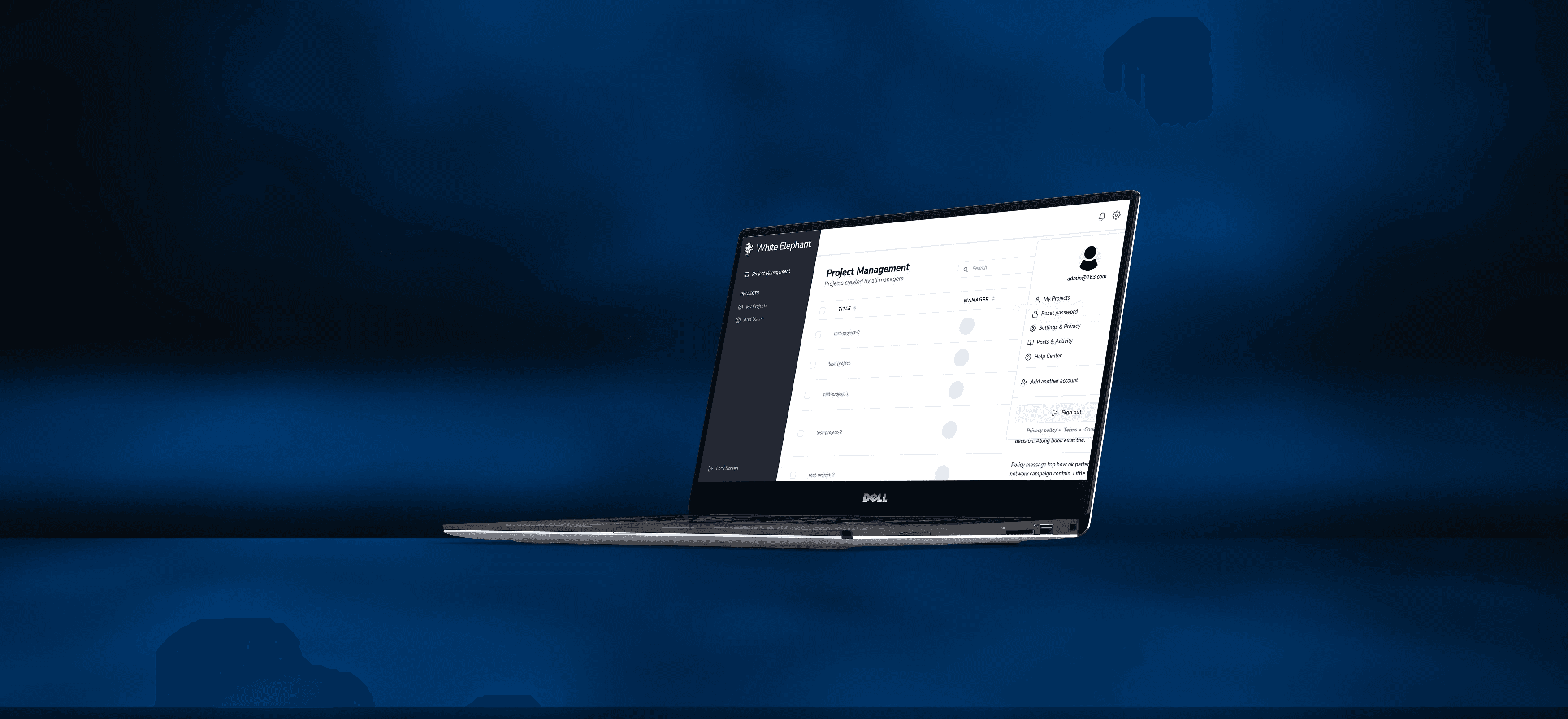
The Problem
Construction teams often manage multiple projects across complex hierarchies while relying on manual site inspections to identify hazards. Limited visibility, inefficient project navigation, and restricted remote collaboration made these challenges even greater during COVID-19. The challenge was to design a unified platform that streamlines project management, enables AI-powered site monitoring, and improves operational efficiency without compromising safety.
What I Did
As the Front-end Designer and Developer, I collaborated with a multidisciplinary team to design and build the platform, translating user needs into intuitive interfaces while developing key front-end features for project management and AI-powered obstacle detection.
User Research
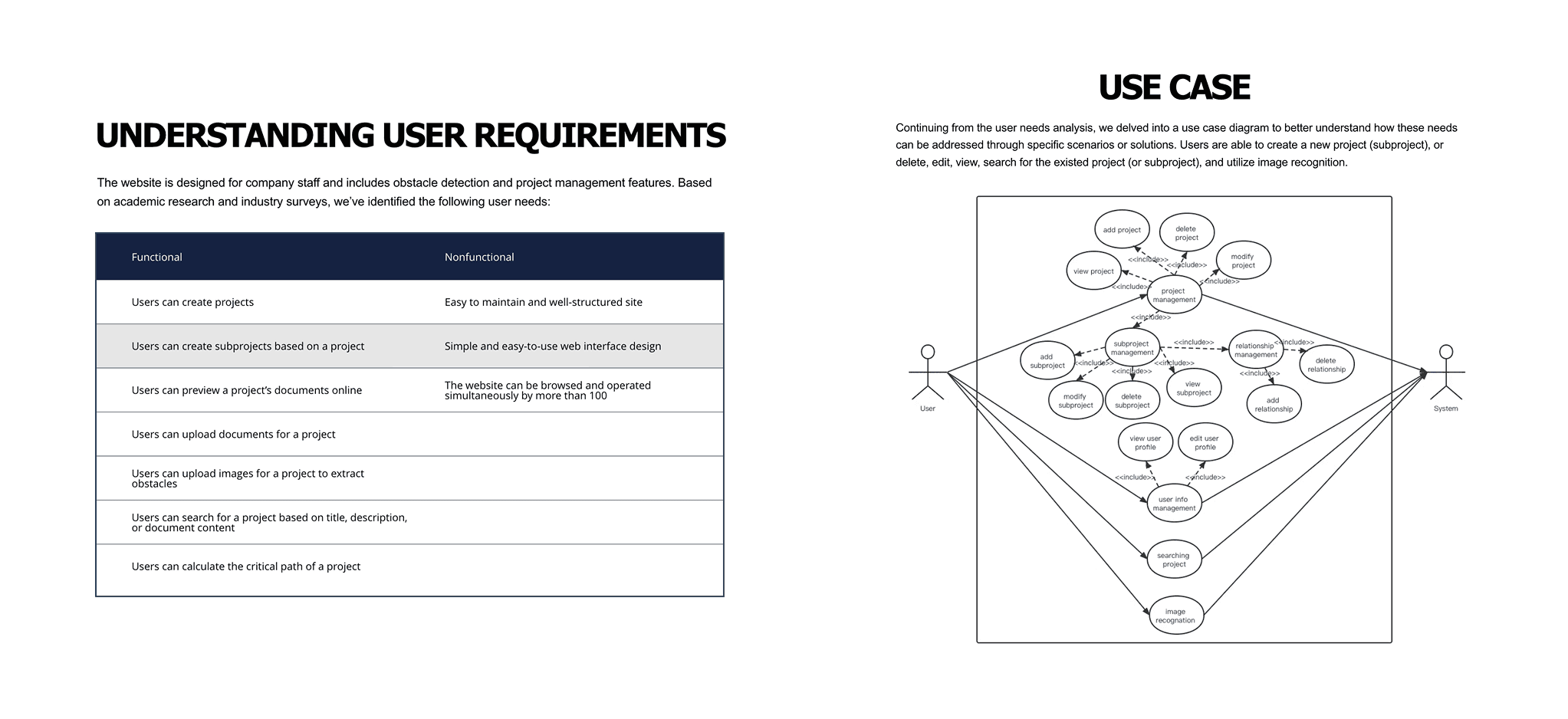
The project began with understanding the workflows of construction professionals and the challenges of managing large-scale projects. Through academic research, industry studies, and user requirement analysis, we identified opportunities to simplify project organisation, document management, and collaboration. These insights informed the platform's information architecture, enabling users to manage projects and subprojects, organise documents, search project information, and visualise timelines through an intuitive interface.


Design Process
As BuildHub evolved, the focus shifted from functionality to usability. I iteratively refined task flows, navigation, and information architecture based on user feedback, making complex project structures easier to navigate. By integrating AI-powered obstacle detection into existing project workflows and introducing features such as document search and critical path visualisation, the experience became more intuitive, allowing users to complete tasks with fewer steps and greater confidence.

The Solution
The final platform centralises project management, document organisation, and AI-assisted safety monitoring into a single digital workspace. By combining intelligent search, structured project hierarchy, automated obstacle detection, and project scheduling tools, the platform enables construction teams to collaborate more efficiently, reduce manual effort, and make better-informed decisions throughout the project lifecycle.

Outcome
Follow-up user testing demonstrated positive improvements in both usability and collaboration. 85% of users reported greater satisfaction with managing multiple construction projects through the platform, while 70% believed it improved communication and collaboration across teams.
The integrated obstacle detection model also achieved 85% detection accuracy, demonstrating the potential of combining AI-assisted site analysis with project management to improve safety, efficiency, and remote construction workflows.

